Category: Sideline Stories

Sideline Stories: Shannon Upton, Account Executive, Maine Mariners

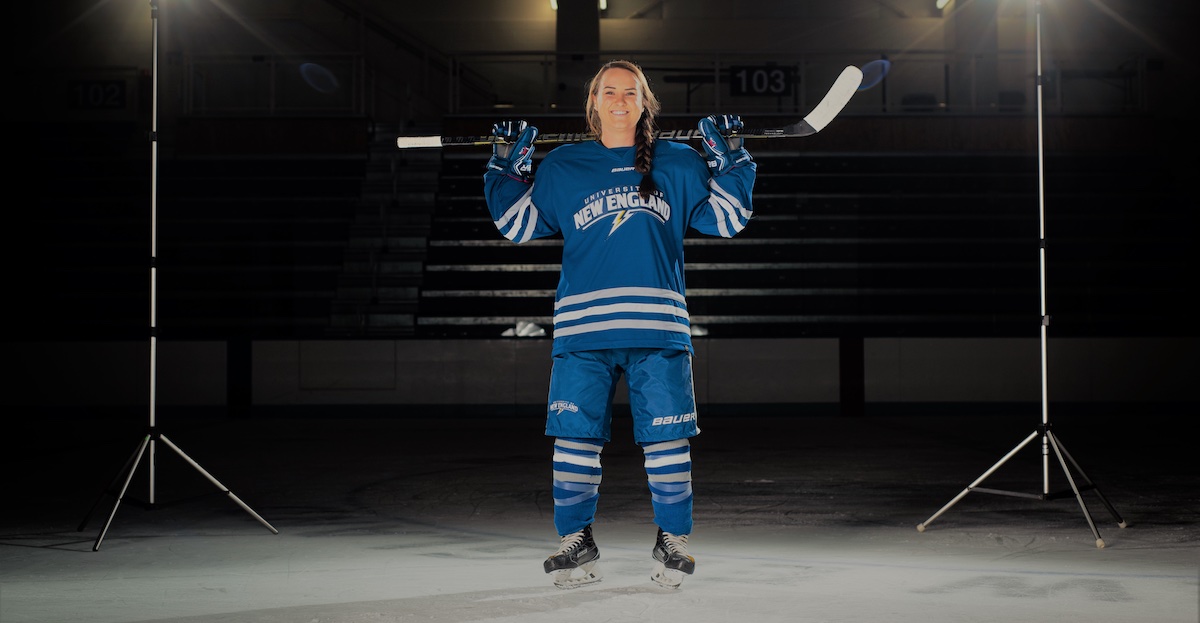
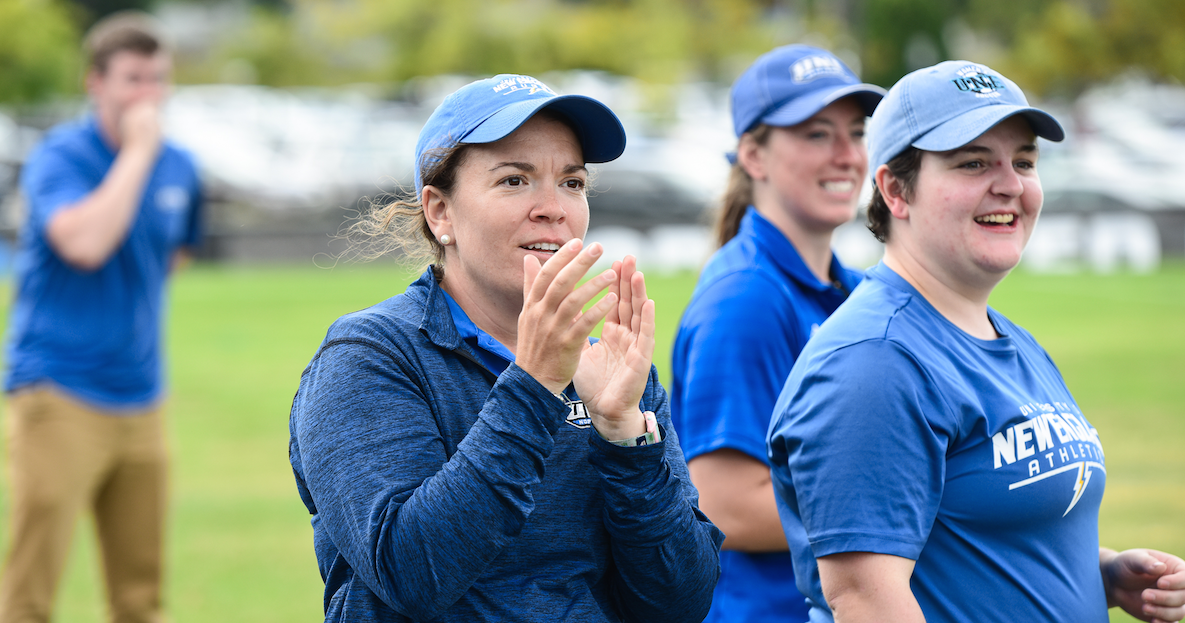
Sports has always played an essential role in my life. I am a graduate of the University of New England 2021 where I double majored in Sport and Rec Management and Business and Coaching. I am now an Account Executive for the Maine Mariners, the ECHL hockey team in Portland where I am so excited to continue my path in the sport I love so much. Since I started with the Mariners, a big initiative of mine has been to grow the involvement in youth hockey! Here is my story on how I got to where I am today.

Growing up on Cape Cod as one of only three girls in my youth hockey organization, I spent most of my youth playing with the boys. The two other girls I began playing with (at the age of 8) I am still lifelong friends with today. That is one of my favorite things about the hockey world – everyone knows everyone, and, in my opinion, is one of the best sport communities to ever be a part of!

My biggest mentor as a young girl was USA Olympic Gold Medalist, Colleen Coyne. When I was 10 years old, Colleen came to a practice and interacted with every single player. She even brought her Olympic gold medal. I remember being in complete awe as my mother took a picture of us together, it’s a moment I remember vividly, 12 years later. Not only did Colleen leave me completely inspired, but, as a young girl, she gave me hope there was a bright future for women who were passionate about the game.

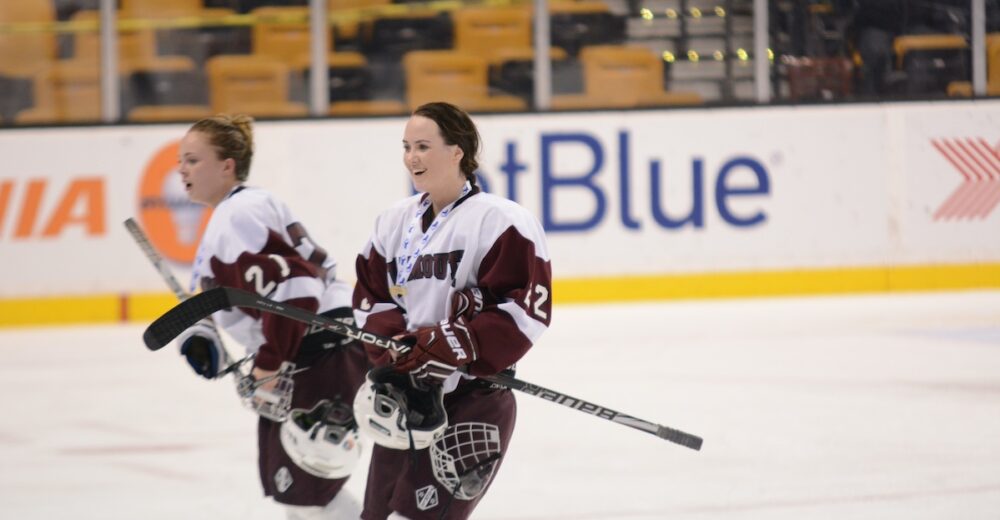
Throughout my years of playing hockey there are several memorable moments that happened along the way. From traveling to New York and California for National tournaments, to scoring the first goal in my high school state championship at the TD Garden my sophomore year and getting the opportunity to play four years of competitive Division III hockey at the University of New England. Throughout my four years of playing for UNE I overcame challenging adversity, developed sportsmanship, exhibited respect for others always. I lived the heartaches of defeat, the adrenaline rush of scoring, and the feeling of achieving a victory with perseverance and hard work, together with my teammates.

I will forever be grateful for the lessons I have learned from playing hockey, both on and off the ice. The people I have played with, the coaches who challenged me to be the best I could be, the community of hockey runs deep, have all instilled values along the way. Anyone associated with hockey understands what that truly means. Now I have a job working for The Maine Mariners, continuing my passion for hockey where I am excited to go each day!  I owe hockey and all that comes with the love of a sport for making me the person I am today. It all began at age 8 and since then,  I have never strayed far from my love of the game.  Now I am determined to inspire, coach, and encourage youth hockey players just as  Colleen Coyne did for me!

Sideline Stories: Lani Silversides, Founder, Strong Girls United Foundation

Sport builds character. Sport prepares you for life. These are things you have probably heard before, and I agree with them wholeheartedly. I also believe that we should be intentional about making those connections for kids and adults alike and that sport can become a beautiful avenue to teach the very skills we can use in everyday life.

If I asked high school and college athletes, “What percent of your game is mental?” most, if not all, will come in somewhere between 60-90%. If that much of their performance takes place between their ears, how can we spend intentional time practicing those skills? What are those skills? 

If asking parents, “What do they want most for their kids in sport?” many will comment on things like “learning to work hard and persevere,” “learning to bounce back from failure or obstacles,” “learning to set goals and compete hard,” along with the typical things like physical activity and social connections or teamwork (I am going to park the “for a scholarship” parents for this blog post). So where in the practice plans do we teach how to bounce back from failure? Or how to set goals? These are the questions I have spent the last 7 years exploring.  

I grew up in Maine and sports have always been a part of my life. I was a four-year tri-varsity in high school, a basketball player at the University of Vermont, and have been teaching and coaching at the high school level since 2005. When taking a sport psychology course and a mindfulness and performance course at Boston University about 10 years into my coaching career, my mind was blown. These were all the skills and tools I wished I had as a college athlete. Mindfulness, gratitude, growth mindset, failure, goal setting, visualization, values, vulnerability, perseverance, etc. How and why are we not teaching them to everyone

I immersed myself in this work, wrote two books during a sabbatical year: Unstoppable: A Mental Training Guide for Fueling Performance, and A Strong Girls’ Guide to Being: Exercises and Inspiration for Becoming a Braver, Kinder, Healthier You, and then in 2018 I was diagnosed with stage 3 breast cancer. This is where all of my studying of the mental skills and my experiences on a team and in sport came into “real life” practice. Like the muscles of our body, the mental skills muscles I had developed and continued to train were strong. My attitude was one of gratitude (for access to treatment, proximity to Boston, the awareness to go to the doctor’s when I felt something was off, and so much more). My mindset became “I get to go to chemotherapy” not “I have to go to chemotherapy.” I broke up my treatments into quarters, like a basketball game. And, I am now in my personal “overtime.” 

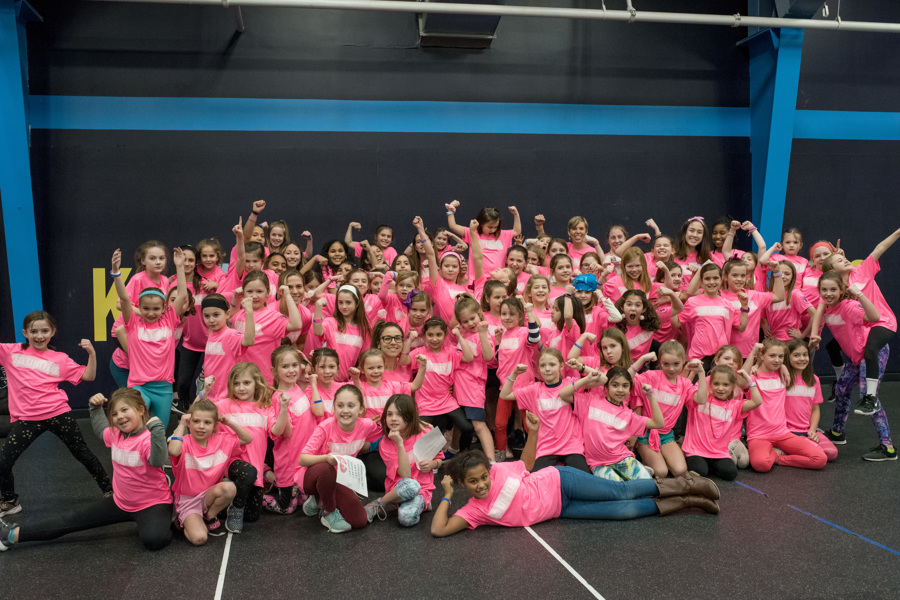
After that year of treatment and so clearly seeing the direct effects of the work for myself and those around me, I founded a nonprofit organization dedicated to girls, SG United Foundation (“Strong Girls United”) with a mission to empower girls to be strong, confident, and resilient through sport and physical activity combined with mental health and wellbeing activities. 

Girls need more access, opportunity, and female leaders in sport (more on this in a future post). Sport is the ultimate place to have social connections, be physically active, and practice all of these other skills that one day, frankly, everyone will need.

Sport can be the pathway that provides a girl with what she needs in the present moment and creates opportunities to develop skills and tools for their future. That is what it gave to me and what I hope to give to the next generation. Our organization and our teams are different. It is not just another sports team. College female athletes around the country serve as the volunteer coaches and the mentors for girls using our curriculum. We blend physical activity with gratitude exercises; we teach sports psychology while mentoring kindness. We invest in our girls to empower them for life.

You are invited to check out the nonprofit organization at www.sgunitedfoundation.org

Individuals or teams (designed for high school age and older and for all genders) can enroll in Lani’s Mindful Performance Training Center

And finally, for information about Breast Cancer Awareness Month, visit: www.nationalbreastcancer.org/breast-cancer-awareness-month


Sideline Stories: Bill Green, Executive Director, Maine Sports Hall of Fame

One night, around 1991, I had an epiphany in Williamsburg, Virginia. I was accompanying my wife who was on a business trip to Colonial Williamsburg. We were seated with couples from Miami, Washington D. C. and Chicago. When they learned where we were from, a lady repeated my answer in disbelief. “M-aa–a-a-a-i-i-n—ah?” She replied as if no one, at least not anyone in a suit, could be from such a wild and untamed territory.  As the conversation rolled along, we discussed recreational opportunity, school test scores and murder rates. By the time the evening was over, I was lying to them because I was afraid they’d move here.

Okay, we need people and that’s a joke, kind of. I realized, in a fancy place with fancy-looking people, that among those four places, Maine was the most desirable place to live by far. I decided to brag about Maine. To be proud of what it has to offer.  This changed not only my professional life, but my life in general.  Some commencement speaker somewhere told graduates to “find a hobby and participate in it once a week.  That hobby should bring you as much joy as if you have doubled your income.” I think that idea is brilliant.  Here is a place you can get out and do things. As the great OutdoorWriter for the Bangor Daily News Bud Leavitt once said, “There’s more beauty in my backyard than there is in the whole province of Labrador as far as I’m concerned.” Here you can paddle the Allagash Wilderness Waterway, hike the toughest part of the Appalachian Trail including the famed “Hundred Mile Wilderness, sail the blue water off our coast, bike byways in any terrain imaginable, tour Maine Huts and Trails, visit the Bold Coast, downhill ski, cross-country ski, hunt, fish, boat or run Beach to Beacon where you’ll meet one of the most highly accomplished and respected athletes who ever lived.  When I asked an artist friend why Maine had produced so many artists, he said, “Artists go to the most beautiful places.” Interesting.  We also produce more than our fair share of writers. One hundred years from now, when we are all gone, the name Stephen King will be known by every school child in America. I can mention him in this article, because he loves sports.  As do I. I am sometimes overwhelmed by how fortunate I am and have been.  A big part of that is the joy that sports bring.  My Patriots and Red Sox might win or lose. There’s always boating on the bay, biking one of my favorite courses around Cumberland or simply pushing a stroller with a one of my newly arrived grandchildren. I didn’t get rich, but I do consider myself very fortunate. Fortunate that something or six someones spurred me to look around and better appreciate the place where I live. I think all Mainers should be happy because we are in one of the most beautiful places in the world and we have an opportunity to take advantage of it.

Sideline Stories: John Rex, Bates ’21, All American Track and Field

Potential is defined as having or showing the capacity to become or develop into something in the future. More personally, potential is defined as a word I heard my entire life. I was raised in a family of Renaissance people: as a kid, I competed in athletics, read books, played instruments, performed in all capacities, and, much to my mother’s dismay, dirtied the kitchen with cooking experiments from time to time. I was fortunate to have parents who encouraged me to dip my toes into just about anything and everything I desired. Did the array of activities in my adolescent years cloud any type of focus or passion? Sure it did.  In hindsight, I wouldn’t change a thing, and that would manifest into a life-changing onset of focus in my college years for I was not prepared, but all the more blessed to have experienced.

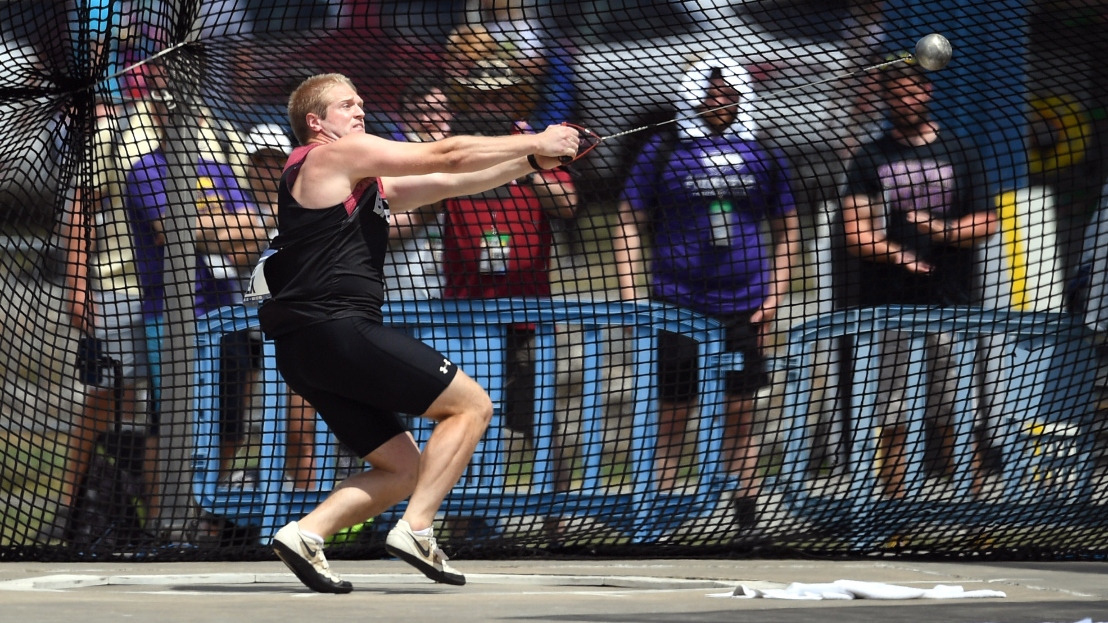
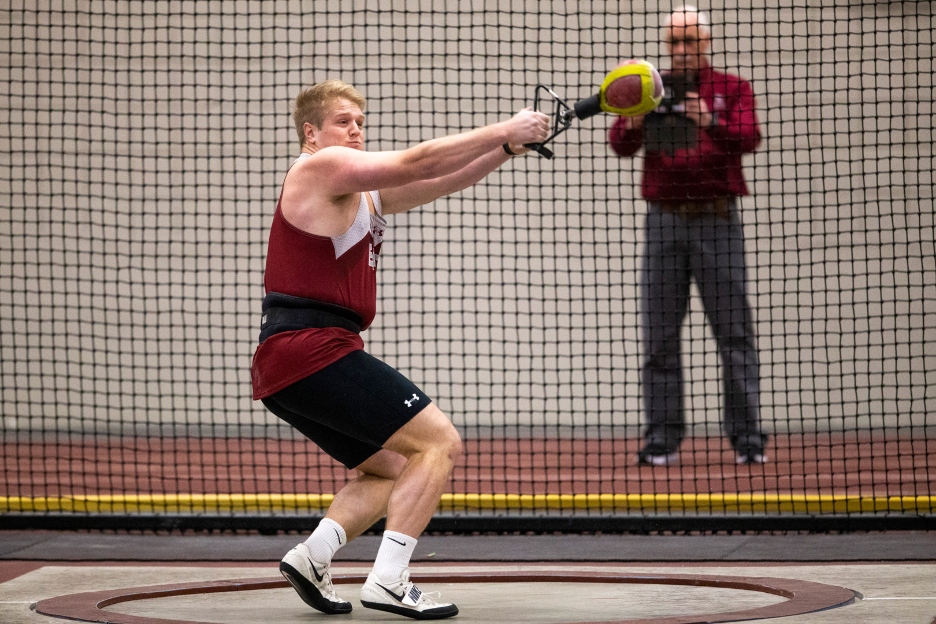
After attending nine years of Catholic grammar school and four years of prep school, I made the decision to attend Bates College with a half-hearted inclination to participate on the track and field team.  My first day of move-in, I found myself face to face with a man who was larger than life – someone who I would later refer to me as my captain, teammate, friend, and brother, Dire. His infectious energy persuaded me to stick around for the fall semester of training. After a few practices, he wasn’t slow to tell me I would be the next all-American thrower in line after him. At the time I was dumbfounded by those lofty claims.

Dire led by example, urging me not to give up in pursuing track and field and a degree in economics. I had not yet understood his sentiment as a first-year, but over the course of the year, I accomplished athletic feats. I fought through the difficulty of my classes, and I became a better all-around student and athlete because of it, and because of him. By the end of my first year, I could begin to see what was possible in the realm of my potential, but I could not have done it without the likes of Dire, Al Fereshetian, my coach, and Julieta Yung, my thesis advisor.

Fast forward to graduation, and I wasn’t there to hear my name called or receive my diploma and economics thesis prize. Rather, I was on a podium holding an All-America award gazing out towards the stadium, teary-eyed by the presence of my family and coach in the stands – the people who unwaveringly loved and supported me in my endeavors. My life was changed forever.

It’s merely impossible to describe such a pivotal experience in so few words, but what I can say is that winning matters, competing matters, and loving one another, above all, matters. I think when people say winning doesn’t matter they think of clout and trophies, and that is not winning by any means. Winning is reaching new levels of your potential through experience and learning – something that is so crucial to endure in any capacity. Dire was aware he could not prepare me for the mental and physical labor attached to the manifestation of his claim, but conquering your potential with passion is truly a life-changing experience. I am grateful to have had such a drastically uniquely and shaping experience in college.

Travis Reed: LifeFlight of Maine Patient, Football Player


Lying in the snow. Struggling to breathe. The pain in his shoulder and abdomen growing more unbearable by the minute.  This wasn’t how 16-year-old Travis Reed thought his first big trail ride would go. Born and raised in Winslow, Travis was always an active kid, playing sports and ice fishing with his family. But he was eager to experience an honest-to-goodness snowmobile ride. Last winter, Travis got his chance when he joined his friend, Chris and his family for a 5-+ mile ride from Newport to Dover-Foxcroft. Travis had already purchased a good trail sled and he was excited to try out his new anti-fog helmet. The group headed north on ITS 85, traveling through woods and across farm fields. As they neared Dover-Foxcroft the trail turned back toward the main road and featured a series of sharp turns. Travis noticed the turns seemed a little icier than the rest of the trail. As he was navigating one of the turns, his sled was pulled toward the ditch. It struck a big log, then a stump, and Travis fell off. When he hit the ground, the impact knocked the wind out of him and before he could catch his breath the pain started. Chris’s parents called 9-1-1.

As luck would have it, an ambulance crew was already nearby and arrived on scene within minutes. The medics placed an IV to start administering medications and then took him to nearby May0 Regional Hospital in Dover-Foxcroft. Despite the medications Travis’s pain wasn’t subsiding. He had ruptured his spleen and gastric artery, causing serious internal bleeding. He’d already lost about a liter and a half of blood. Travis badly needed surgery to repair the damage to his organs and stop the bleeding. The Mayo team called LifeFlight to transport him to trauma specialists at Northern Light Eastern Maine Medical Center in Bangor. Before they left the scene in the ambulance, Chris’s father, Mike, had called Travis’s mom, Lisa, to let her know what was happening. When she arrived at Mayo and saw her son she remembers he was shivering and white as a sheet.

“The flight crew arrived not long after. I remember they put in another IV. The team was moving fast, but Flight Nurse Kathy Beller, took the time to explain what was happening and what they were going to do.” With tears in her eyes, Lisa stood outside and watched the helicopter take off with her son on board. Then she climbed in the car and Travis’s friend drove her to EMMC. By the time Lisa made it to Bangor, Travis was already in surgery with Dr. Anthony Tannous.

Thanks to the care he received along the way, from the medics at the scene and emergency department team at Mayo, to the flight crew and trauma specialists at EMCC, Travis was able to go home after only four days in the hospital. He spent another week recovering before he returned to school and took a few months off from playing contact sports. Today, Travis feels as good as new. His life has returned to normal and he is back to playing football. It’s as if the accident never happened!

When something knocks you down, don’t be afraid to jump back on top. The worst thing you could ever do is stay away and develop a fear. Taking time to reflect is always a smart choice as well. – Travis Reed, Winslow High School, Class of 2022

I am so grateful for the LifeFlight crew. They took excellent care of Travis. Looking at him today, you would not know what he went through. I’m so glad he is back to himself and playing football this fall. – Lisa Reed

Travis returns to the football field as a senior at Winslow High School this autumn. Go, Travis!

Remember, the Cross for LifeFlight of Maine fundraiser is taking place throughout the month of August!

Sideline Stories: Ashley Potvin-Fulford, UNE Head Women’s Rugby Coach, Founder, A Running Passion; Girls Got Game Camp Director

Athlete’s Gonna Athlete: Finding joy in competing, training, and trying after competitive sports

Athlete: a person who is trained or skilled in exercises, sports, or games requiring physical strength, agility, or stamina. I grew up in Biddeford playing and doing a little bit of everything. I danced, figure skated and played basketball, soccer, ice hockey, and softball. When I went to college, I played two seasons for the Norwich University Women’s Ice Hockey team and later found the amazing game of rugby. I was fortunate enough to play for, at the time, one of three NCAA women’s rugby programs. After college, I continued playing rugby with the Portland Women’s Rugby Football Club. I was an athlete. An athlete was how I identified, how I socialized; it was who I was.

As I reached my mid-twenties, I hung up my cleats and focused solely on coaching. As most other things, I went all in. I coached several sports in the Biddeford School System including girls soccer, softball, and ice hockey.  In addition, I was coaching the UNE Women’s Rugby team (now my full-time job) and giving private skating lessons all while teaching a full load of classes at Biddeford Middle School. My competitive rugby and team sport days appeared to be over but I also wasn’t quite ready to stop moving or “athleting.” My schedule went from revolving around my own playing schedule to the practice and playing schedules of the teams I was coaching. I guess I was…a retired athlete, but when in our lives are we supposed to stop identifying as an athlete? If there are senior games and masters athletes, do we ever stop? Should we ever?

Since ending my playing career in competitive athletics, I have since dipped my toes into numerous activities and sports and dug right into others including speed skating, spin class, golf, yoga, tennis, curling, rock climbing, weightlifting, hiking, camping, and with the help and encouragement from my late husband, Will Fulford, I started long distance running. Since 2013, I have run eight half marathons, two full marathons, and a slew of 5ks and 10ks. I am not the fastest or the best— but I train hard, run hard, try hard, and still surprise myself from time to time. I am an athlete.

As a younger athlete, I loved being coached. I loved working towards improvement, learning new things, and pushing the envelope. I still love all of those things. I am thankful that the skills I learned and joy I found as a young athlete have helped me continue to stay healthy, learn, grow, try new things and encourage young athletes to reach for their fullest potential whether it be in my role as a collegiate coach, the Girls Got Game Sports Camp Director, or the president of the non-profit organization, A Running Passion. 

Is there anything better than reaching the top of a mountain, runner’s high, or the excited butterflies you get before you’re up to bat? Your body still has so much to give after the last whistle or buzzer of your most competitive years. Find new passions to ignite and don’t stop moving. After all, athletes are going to athlete even if it looks and feels different than it once did.

Sideline Stories: Liam Somers, Cyclist, LifeFlight of Maine Patient

An avid cyclist, I was visiting my hometown of Bar Harbor and headed to Acadia National Park for a weekend of riding with friends. This particular morning I was out on my own for a quick training ride.

The sun sitting just above the horizon, I was keeping my head low to shield my eyes from the glare as I pedaled up a long gradual incline, then I headed down a quick descent topping out at about 23mph. With my head down because of the sun, I didn’t see that a car had pulled off the road and was parked in the righthand lane. Never seeing this car, I crashed into the back of it at full speed. The force of the impact catapulted me head first through the back window, the glass cutting deeply into my neck and chest. I bounced back out of the car and immediately knew I was in trouble, as blood gushed from my neck.

Passersby called for help and one heroic man applied pressure to my neck wound to try and stem the blood loss. I remember thinking, “There’s so much blood. How am I going to survive this?”

I started doing breathing exercises to calm myself down and slow my heart rate, in hopes of limiting my blood loss as best I could. Soon after, several more heroes arrived and began to attend to my injuries, one of whom was a new nurse at Mercy Hospital, who just happened to be visiting to run the Mount Desert Island marathon and the other was a flight medic visiting Acadia from Florida. I couldn’t have been more fortunate for this level of care.

The glass from the windshield had sliced through several blood vessels and arteries in my neck and I needed surgery from trauma specialists, but the closest ones were more than 50 miles away in Bangor. A ground ambulance would take more than 90 minutes to cover that distance, but the LifeFlight of Maine helicopter could do it much faster and I was running out of time.

The closest helicopter, based in Bangor, was already on a call, so the Lewiston-based aircraft headed for Seal Harbor, arriving just minutes later. The flight crew assessed my injuries and prepared me for the 18-minute flight to Eastern Maine Medical Center in Bangor. There, a world-renowned surgeon happened to be on call and he and his team set out to repair the damaged blood vessels in my neck and stop the bleeding. They intubated me to assist with breathing, as my airway had all but closed off due to the trauma to my neck. They then placed me in a medically induced coma for 2 days to allow for the swelling in my neck to subside.

Thanks to the quick trip, amazing heroes who showed up and worked to keep me alive and the incredible and experienced care of the flight crew from LifeFlight of Maine, I made a full recovery (and many new friends) with just a few lingering scars to remind me of that fateful bike ride.

MSC: Please visit LifeFilght of Maine to learn more about their services as well as their annual fundraiser, Cross for LifeFlight, taking place August 1st through 31st. This reimagined event encourages participants to get creative – swim, paddle, cycle, walk, run! Maybe you know a participant or want to be part of this impactful event~

Image above by Angelica Dixon Photography

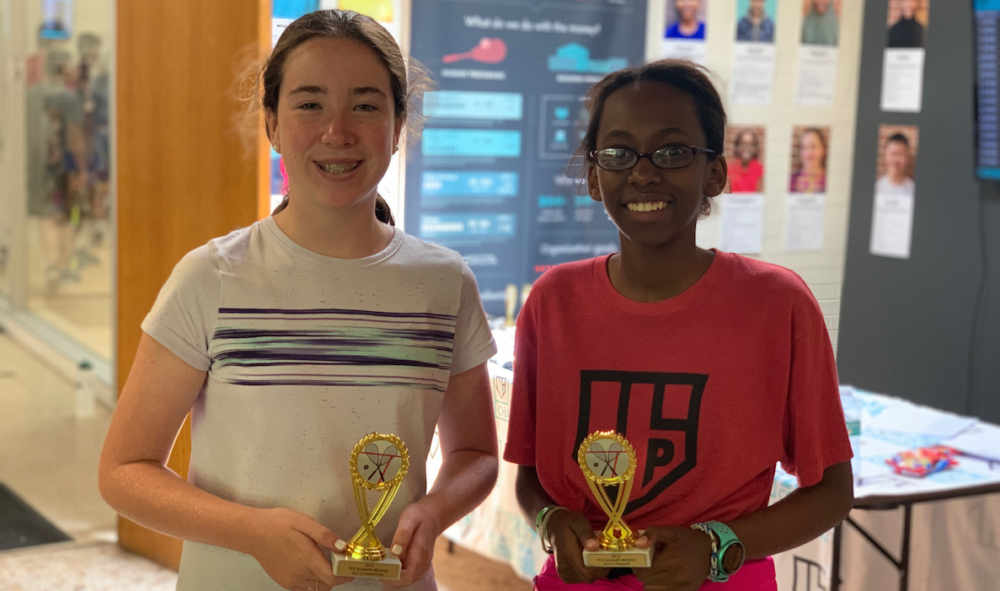
Armelle: Portland Community Squash Player

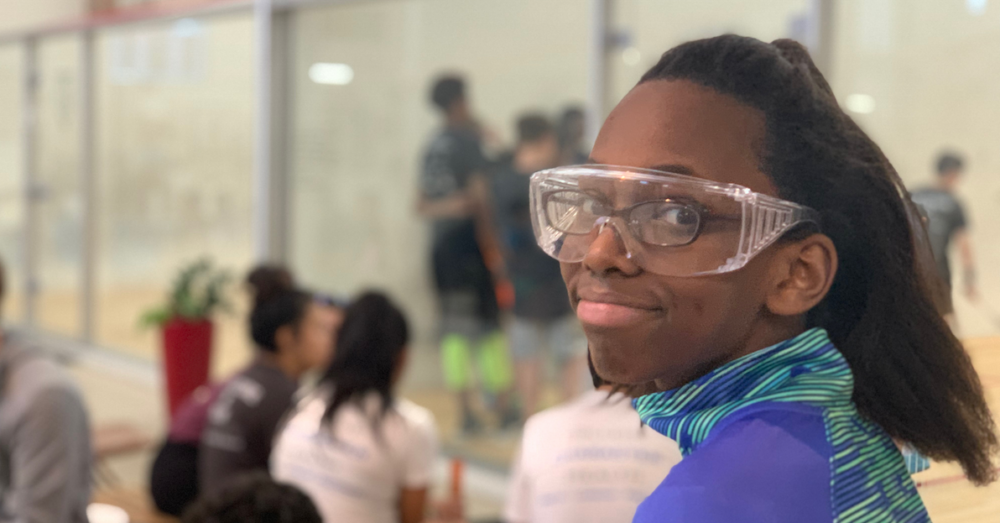
Whoop! Yay, I won against my competitor! The object of squash is to hit the wall on the front wall and send the ball to your opponent on the other side. My favorite shot is the drop shot. The drop shot is one of the deadliest shots on the court. It’s when you smack the ball onto the wall that is lower than the service line and just a little bit above the tin so it doesn’t count to be immediately out. It can make your opponent mess with their head long enough before they can reach the ball and get it.

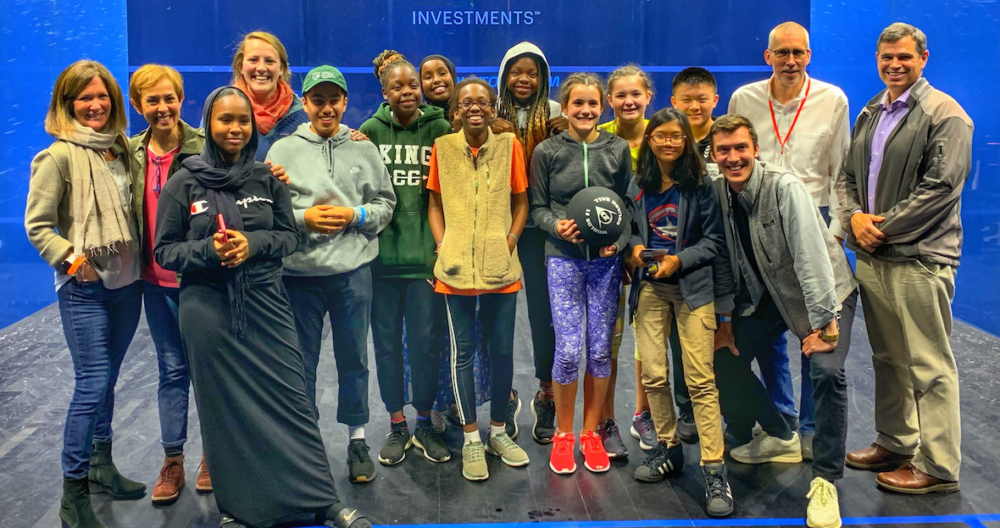
Portland Community Squash is where I go to practice and learn to play squash and how to become a pro someday. I got introduced to it when I was in Learning Works in 4th grade. In the beginning, I didn’t like it because of how bad I thought I was. But somehow I found myself back there every week. Portland Community Squash provides everything that I need. I get to practice two times a week. We have Learning Works kids that come over and they learn how to play squash. The staff members there really are helpful. They offer rides, talk to you about anything, help with homework, and are there for you until college. It wasn’t until the 6th grade spring season that I had my first practice at Portland Community Squash, and then later joined the Rally Portland team. Five years later, I have become a level four 9th grader and am winning match after match. I haven’t always been this good. In the beginning, I wouldn’t normally go to matches because of the level that I was in or how much better other people were.

It’s hard to put into words how much I care about squash and how it impacts me. The friends that I have made, the lessons I’ve learned. Squash transformed me into the person that I am today and I am grateful that Portland Community Squash did that. Being a part of the Rally Portland team has made me be a better teammate, player, friend, and human being. A phrase that has always been a part of me is “REP the shield” meaning to respect, effort, and positivity, which I take to heart. Squash to me didn’t mean winning games and earning points but is a new challenge every time I step onto the court.

Sideline Stories: John LeMieux, Founder, Gorham Savings Bank Maine Amputee Open

Sports has always played a key role in my life. I played high school basketball at Mt. Ararat and as a post-graduate at Maine Central Institute. After playing at Lyndon State in the late 70’s and early 80’s, I was a college basketball coach for nine years. I earned a master’s degree from Indiana University and was a women’s assistant basketball coach at Kent State and PITT before becoming a head coach at age 28. My women’s teams at Keene State College won back-to-back Division II ECAC championships while setting school records for wins both years and I was named the New England Collegiate Athletic Conference “Coach of the Year” in 1988. After KSC, I started the men’s basketball program at Colby-Sawyer College, leading the first team, made up entirely of freshmen, to a 13-12 record against Division III varsity opponents.

I lost my left leg to cancer (sarcoma) in December, 2012. In a twenty-hour surgery the doctors cut out the cancerous left thigh and performed a rotationplasty, leaving me with my lower left leg, now attached at the hip joint, facing backward with my foot approximately 15 inches off the ground. My story of the surgery, physical recovery and emotional growth is unique but also universal. My journey is the shared path of all who have had their life upended without notice or warning; the irreversible hand of life gently guiding or firmly pushing us in the direction our life was to go. My diagnosis was no different –it was the shared experience that we are not in control. The experiences we all must confront at some point in our lives.

When I was told I had cancer I was determined to act. I just didn’t know how. I would find out as I went.

Today is the only opportunity to affect tomorrow. I learned that lesson from my high school and college basketball coaches and from studying the philosophy of some of the greatest coaches of the 20th century. People like John Wooden, who I had the great fortune to meet before his death in 2010. We are not promised anything in life, but we get to choose how we respond to what life hands us. When coaching I told my players I welcomed mistakes of commission- attempting to do something positive over mistakes of omission- being afraid to attempt something. A coach can correct and teach from something attempted, but it is impossible to correct something that never happened.

Since losing my leg I have focused on improving my golf game. I have lowered my handicap to single digits and play in regional and national tournaments for amputee and disabled golfers. Through the Amputee Association of Maine, I started the Gorham Savings Bank Maine Amputee Open- a 36 Hole tournament for amputee, disabled and able-bodied golfers held at Brunswick Golf Club. We also hold a corporate scramble and Adapted Golf Clinic as part of our events each year. Lasting relationships have formed through this event – players look forward to this experience every summer. We hope to see you in July for our 5th tournament!


After leaving coaching John began work in financial services and is the co-founder of Anton LeMieux Financial Group with partner Eric Anton. The business serves clients across the nation with offices in Falmouth, Maine and Naples and Daytona Beach, Florida

John LeMieux recently published, “Life > Limb -My journey to becoming whole. Life is greater than limb.” The book details the surgery, his recovery, and his life.                           

Amazon: https://www.amazon.com/dp/B0956LSPBN

Apple:  https://books.apple.com/us/book/id1567637778